10 Animals with Bizarre Abilities That Scientists Can’t Explain
Our planet is home to millions of incredibly diverse species, but some creatures possess traits so extraordinary that they sound like they were plucked straight from a comic book. From biological immortality to generating sun-like temperatures underwater, nature constantly challenges the boundaries of what we believe is biologically possible.
While modern science has made giant leaps in understanding evolutionary biology, there are still animals with bizarre abilities that leave the world’s top researchers thoroughly scratching their heads. In many of these cases, science has uncovered part of the answer, but the precise mechanics behind these weird animal adaptations remain partly mysterious.
Let’s dive into the fascinating world of unusual animals and explore 10 creatures with “superpowers” that scientists are still studying today.
- 1. Immortal Jellyfish: Reversing the Clock of Life
- 2. Tardigrade (Water Bear): The Indestructible Micro-Beast
- 3. Axolotl: The Flawless Rebuilder of Flesh and Bone
- 4. Mantis Shrimp: A Vision Beyond Human Imagination
- 5. Naked Mole-Rat: Defying Cancer, Pain, and Time
- 6. Platypus: The Venomous, Electro-Sensing Evolutionary Riddle
- 7. Planarian Flatworm: Keeping Memories Alive After Decapitation
- 8. Pistol Shrimp: A Living Sonic Cannon Hotter Than the Sun
- 9. Octopus: Master Class in Real-Time Gene Editing
- 10. Lyrebird: The Ultimate Acoustic Illusionist of the Forest
- Why Do Animals Develop Such Bizarre Abilities?
- What These Strange Abilities Tell Us About Nature
- Conclusion
- Frequently Asked Questions
- Are there really animals that are biologically immortal?
- Why can’t science fully explain these strange animal adaptations?
- What is the most resilient animal superpower known to science?
- Can studying these unusual animals lead to human medical breakthroughs?
- How many undiscovered animal species with bizarre abilities might still exist?
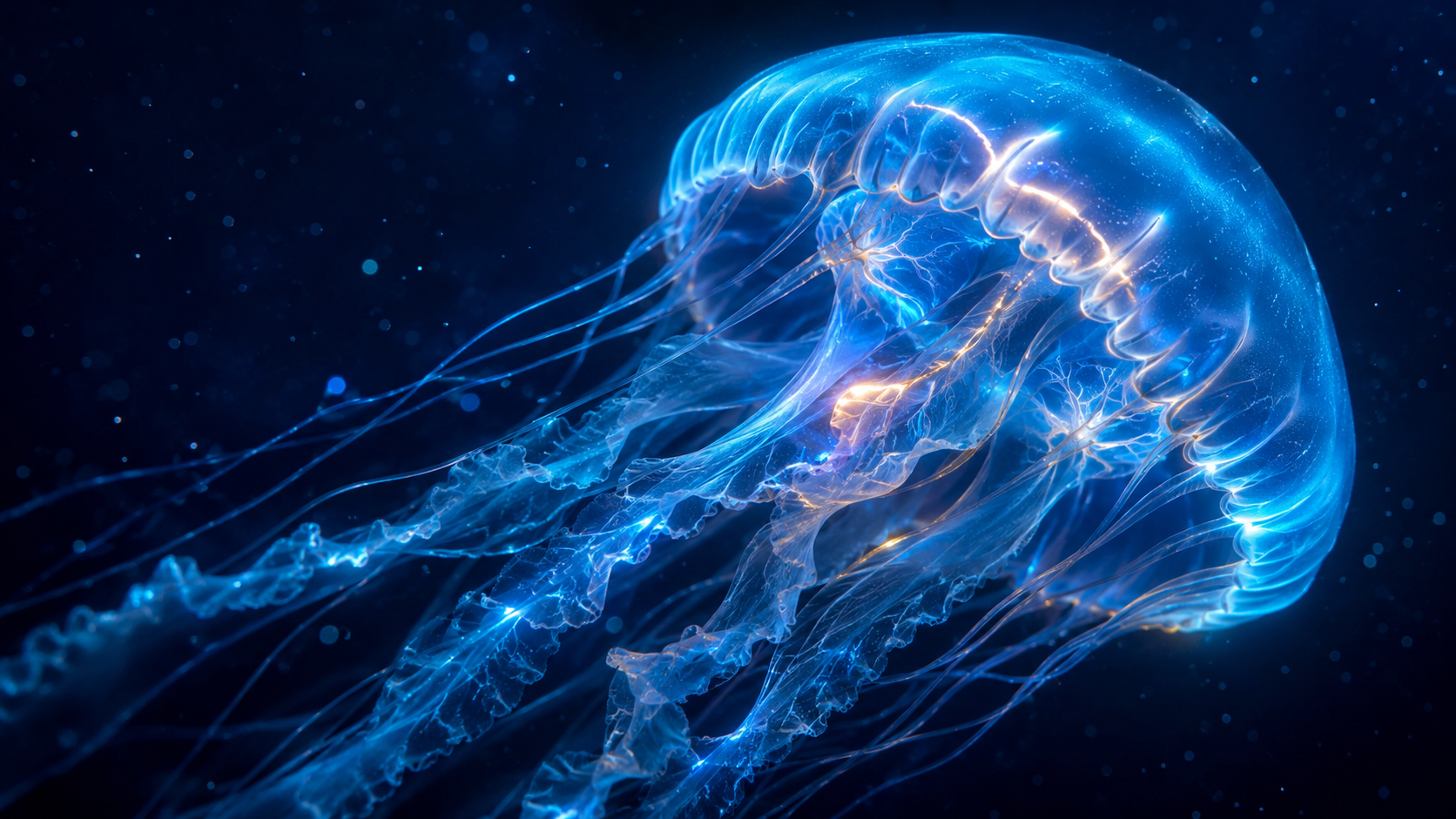
1. Immortal Jellyfish: Reversing the Clock of Life
What if growing old was entirely optional?
For the tiny marine creature known as Turritopsis dohrnii, or the immortal jellyfish, aging is not a one-way street. When faced with physical stress, environmental trauma, or starvation, this creature undergoes a mind-bending process. Instead of dying, it actively reverts its cells back to their earliest, youthful polyp stage, effectively restarting its entire life cycle from scratch.
To achieve this, the jellyfish utilizes a rare process called cellular transdifferentiation, in which adult cells transform into entirely different types of cells. Researchers continue to investigate the precise genetic triggers behind this transformation. While we understand the biological concept, how a complex multicellular organism manages to perfectly reverse cellular degradation without losing its genetic integrity remains a profound secret that could one day hold key insights into human longevity.
2. Tardigrade (Water Bear): The Indestructible Micro-Beast
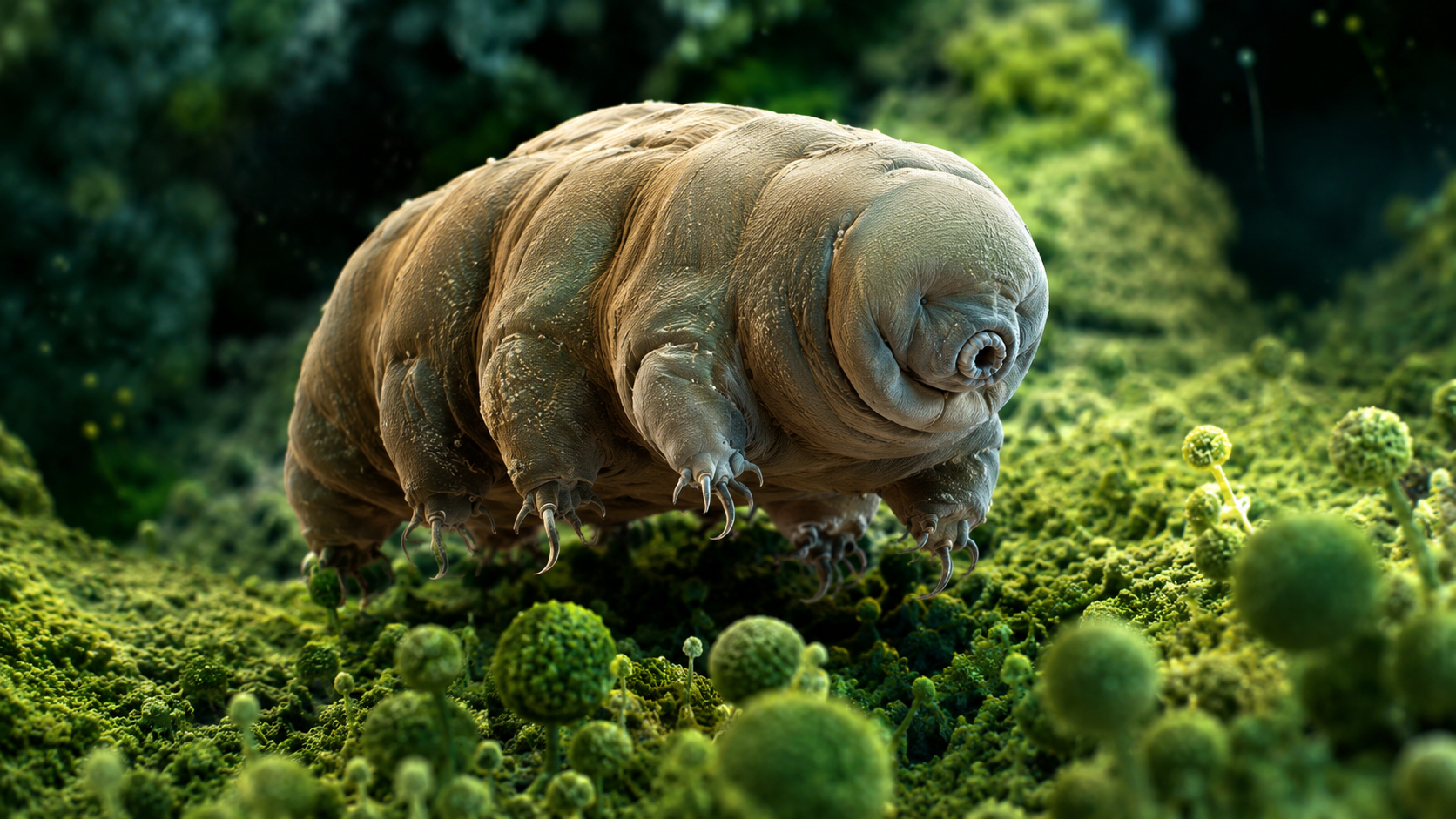
If an apocalypse ever wipes out all complex life on Earth, you can bet these microscopic creatures will still be walking around.
Measuring less than a millimeter in length, tardigrades (popularly known as “water bears”) are arguably the most resilient survivors on Earth. These plump, eight-legged micro-animals can survive the crushing pressure of the deep ocean, temperatures near absolute zero, intense boiling, massive doses of radiation, and even the airless vacuum of outer space.
They survive these lethal extremes by entering a state of suspended animation called cryptobiosis, where they expel nearly 97% of the water from their bodies and pause their metabolism. While scientists have discovered that tardigrades produce unique “damage suppressor” proteins (Dsup) that coat and shield their DNA, how they can completely pause and resume life—and perfectly repair shattered DNA strands upon rehydration—is a phenomenon that researchers are still struggling to fully grasp.
3. Axolotl: The Flawless Rebuilder of Flesh and Bone
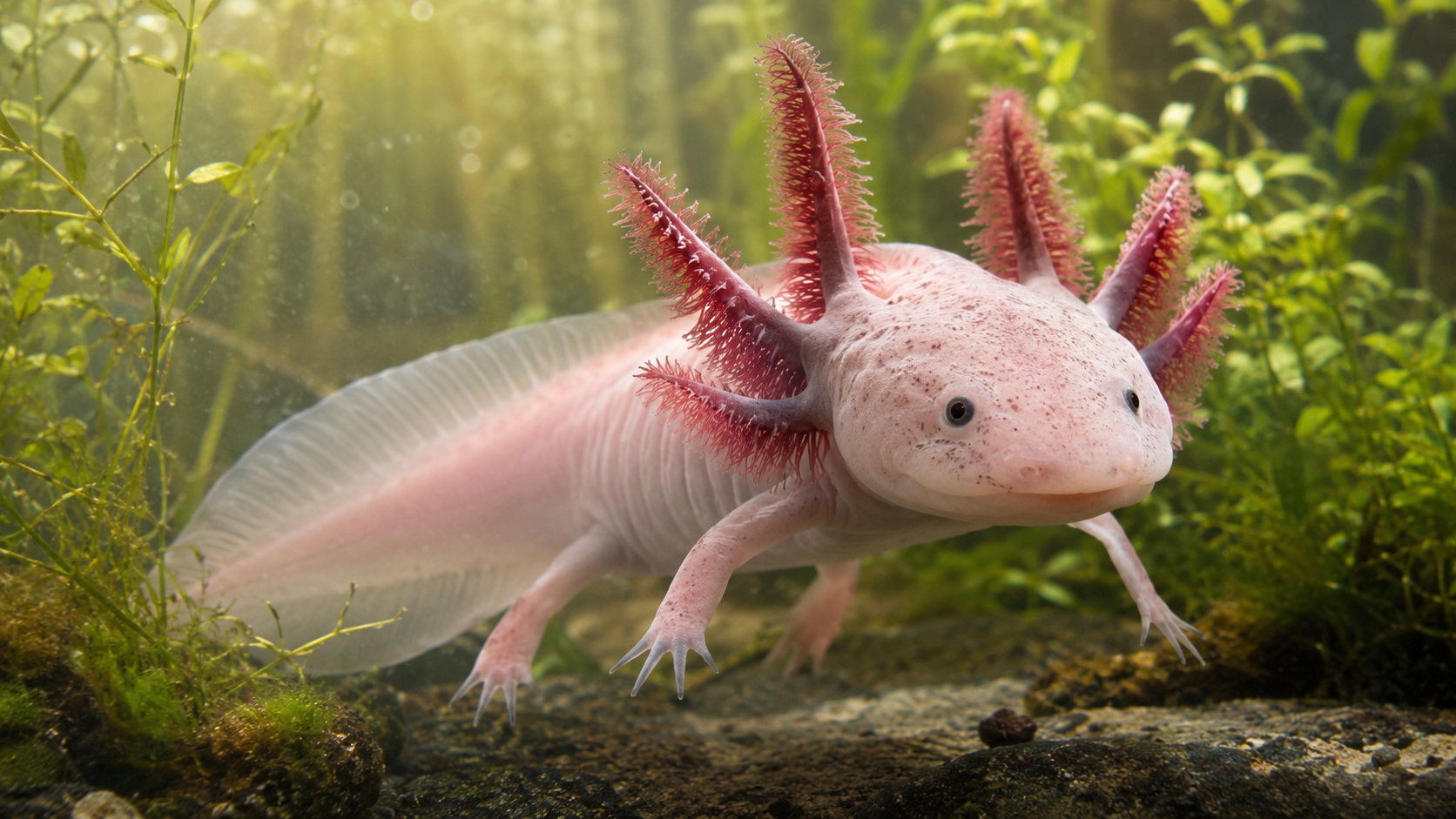
Lose a limb, a portion of your heart, or even half of your brain, and your body simply grows a perfect new one.
This sounds like science fiction, but for the axolotl—a critically endangered Mexican salamander—it is a regular Tuesday. Unlike other vertebrates that heal wounds by forming scar tissue, the axolotl can perfectly regenerate limbs, spinal cords, internal organs, and large sections of its brain without leaving a single scar.
According to available research, the key lies in their cells’ ability to revert back to stem-like states, forming a pool of cells called a blastema to rebuild the lost body parts. Yet, the deep mystery remains: why do axolotls retain this supreme regenerative superpower throughout their adult lives, while almost all other vertebrates lose this ability as they grow? Scientists are still studying these pathways in hopes of unlocking regenerative therapies for human medicine, but the complete molecular blueprint is still far from fully understood.
4. Mantis Shrimp: A Vision Beyond Human Imagination
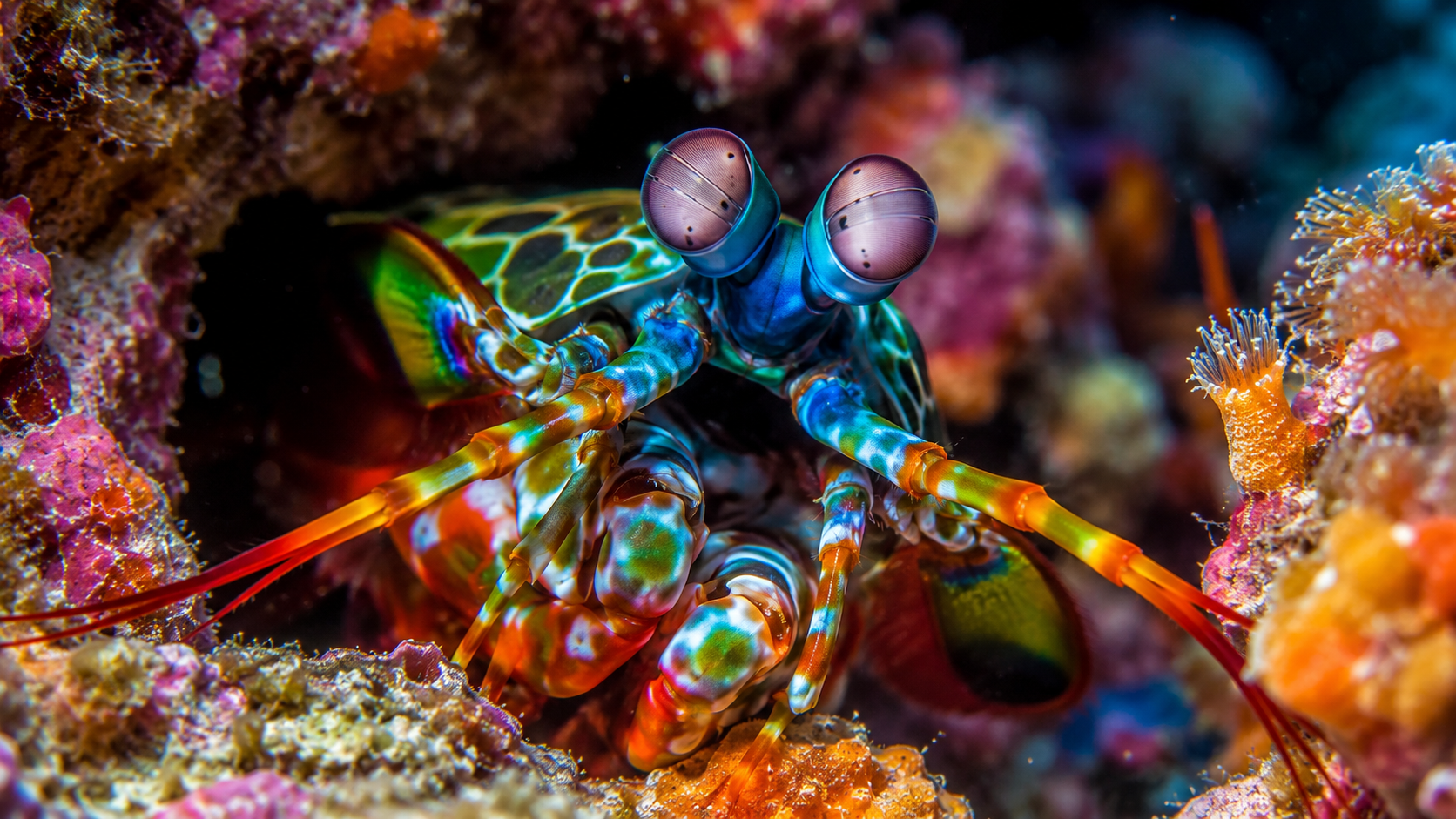
Imagine looking at a simple leaf and seeing colors, waves, and patterns that are literally unimaginable to the human mind.
The peacock mantis shrimp is famous for its hyper-speed punch, which can shatter aquarium glass with the force of a .22 caliber bullet. However, its most bizarre ability actually lies in its eyes. While humans possess three types of color-receptive cones (red, green, and blue), the mantis shrimp boasts an astonishing 12 to 16 different photoreceptor types. They can see ultraviolet light, infrared light, and even circular polarized light.
Curiously, behavioral studies suggest they don’t actually discriminate between closely related colors as well as we do. This has created a biological paradox: why possess the most complex visual apparatus in the animal kingdom if your brain processes color through a simplified, rapid-comparison method? The evolutionary necessity of this alien-like vision is an ongoing puzzle that science has yet to fully solve.
5. Naked Mole-Rat: Defying Cancer, Pain, and Time
They might look like highly wrinkly, buck-toothed sausages, but their biological blueprints are close to perfection.
The naked mole-rat is a medical marvel. While a normal mouse lives for about two to three years, these subterranean rodents can live for over 30 years—all while showing virtually no signs of normal aging. Even more remarkably, they are naturally immune to developing cancer and do not feel certain types of chemical pain, such as the burning sensation of acid.
Research suggests that their high-molecular-weight hyaluronic acid stops cancer cells from dividing and clumping together. Furthermore, their unique nervous system blocks pain pathways that are highly active in other mammals. However, how all these extreme evolutionary adaptations work together to prevent age-related diseases so flawlessly is a biological miracle that researchers continue to investigate with intense interest.
6. Platypus: The Venomous, Electro-Sensing Evolutionary Riddle
When British scientists first saw a platypus specimen sent from Australia in 1799, they literally tried to cut it open with scissors, believing it was a taxidermy hoax.
The platypus is a biological mashup: it has a duck-like bill, a beaver’s tail, webbed feet, lays eggs, and the males possess venomous ankle spurs. But their strangest superpower is how they hunt. When diving underwater, a platypus shuts its eyes, ears, and nostrils completely. It navigates and catches prey entirely in pitch darkness using a highly sophisticated system of electroreception embedded in its bill.
The bill has tens of thousands of sensory receptors that detect the tiny electrical fields generated by the muscular movements of small shrimp and insect larvae. While electroreception is common in sharks and fish, the platypus is one of the only mammals to possess this “sixth sense.” The evolutionary path that led a warm-blooded, egg-laying mammal to develop such an intricate aquatic guidance system remains a fascinating riddle.
7. Planarian Flatworm: Keeping Memories Alive After Decapitation
If you chop off a planarian’s head, not only does it grow a brand-new head and brain, but the new brain still remembers what the old head learned.
Planarians are small flatworms famous for their nearly infinite regenerative capacities. Chop one into twenty pieces, and you will eventually get twenty identical, fully formed worms. However, biology laboratories discovered a truly mind-bending phenomenon: if you train a planarian to navigate a specific light-patterned maze to find food, then decapitate it, the tail section will eventually grow a completely new head. When re-tested, this newly regenerated worm still retains the memory of how to solve the maze.
This suggests that memories might not be exclusively locked inside the brain’s neural networks. Instead, they may be stored throughout the body’s somatic cells, or perhaps encoded chemically via RNA. How memories can survive the absolute destruction and rebuilding of a central nervous system is a deep neurobiological mystery that challenges our fundamental understanding of memory and consciousness.
8. Pistol Shrimp: A Living Sonic Cannon Hotter Than the Sun
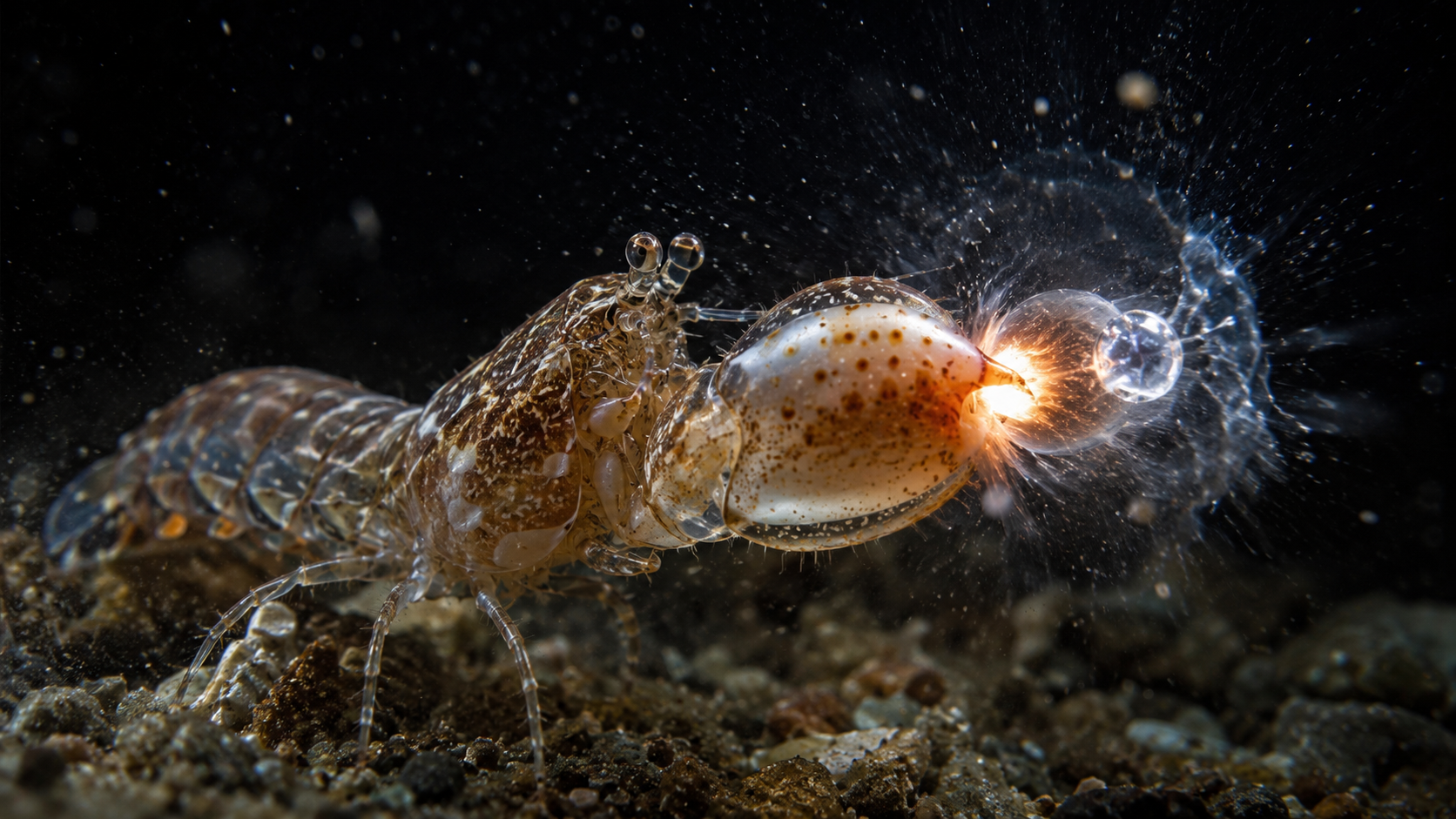
Within a fraction of a second, this tiny shrimp can generate a sound louder than a jet engine and a temperature hotter than the surface of the sun—all underwater.
The pistol shrimp possesses one normal claw and one massive, specialized snapping claw. When it snaps this giant claw shut at lightning-fast speed, it does not actually hit its prey. Instead, the motion is so rapid that it ejects a high-velocity jet of water, creating a low-pressure cavitation bubble.
As this bubble collapses, it produces an acoustic shockwave reaching over 210 decibels, instantly stunning or killing nearby fish. This bubble collapse also triggers a flash of light (sonoluminescence) and generates temperatures exceeding 4,400°C (8,000°F). How a tiny, delicate biological tissue can repeatedly withstand and channel such immense, destructive energy without incinerating itself is an extraordinary feat of organic engineering that researchers continue to study.
9. Octopus: Master Class in Real-Time Gene Editing
While humans must wait hundreds of thousands of years for genetic mutations to adapt, the octopus can simply rewrite its own genetic code on the fly.
Octopuses are incredibly intelligent, displaying advanced problem-solving skills, tool use, and camouflage abilities. But their most bizarre superpower is microscopic. Unlike most living organisms, which strictly follow the instructions written in their DNA, octopuses and their cephalopod relatives frequently edit their genetic instructions at the RNA stage.
By editing their RNA, an octopus can instantly alter the structure of proteins in its nervous system. This allows them to dynamically adjust to extreme temperature shifts, such as moving from warm shallow waters to the freezing deep ocean. Why cephalopods opted for this rapid RNA editing pathway—which actually slows down their long-term DNA evolutionary rate—is an evolutionary paradox that biologists are still struggling to fully explain.
10. Lyrebird: The Ultimate Acoustic Illusionist of the Forest
Walk into the Australian rainforest, and you might hear a perfect rendition of a car alarm, a camera shutter, or a screaming chainsaw—all coming from a single wild bird.
The superb lyrebird is the undisputed champion of mimicry. While many birds can copy simple sounds, the lyrebird has an incredibly complex vocal organ called a syrinx, controlled by an intricate array of muscles. This allows them to mimic almost any acoustic frequency with stunning, frightening precision.
In the wild, they use their mimicry to attract mates and defend territory. They can effortlessly replicate the complex songs of dozens of other bird species simultaneously. But the real mystery is their perfect imitation of artificial, human-made noises. Why their evolutionary development favored such a massive, high-fidelity acoustic processing brain simply for courtship remains a subject of great scientific curiosity.
Why Do Animals Develop Such Bizarre Abilities?
Nature is a highly competitive arena, and every unusual animal adaptation is a direct response to the ultimate goal: survival and reproduction. Whether it is a pistol shrimp surviving in the dark ocean depths or a tardigrade enduring extreme environmental shifts, these “superpowers” are evolutionary solutions to specific, high-stakes challenges.
However, evolution is rarely a straightforward path. Some of these strange animal abilities may have developed as accidental byproducts of other genetic shifts, which is why scientists often find it difficult to pinpoint a single, clean explanation for how they came to be.
What These Strange Abilities Tell Us About Nature
Exploring animals with unexplainable abilities serves as a beautiful reminder of how little we actually know about the natural world. Life is incredibly creative. The fact that a simple flatworm can store memories in its body or an octopus can edit its genetic output in real-time shows that the biological “rules” we write in textbooks are much more flexible than we previously assumed.
As researchers continue to investigate these nature mysteries, they do not just satisfy human curiosity. They unlock biochemical keys that could one day revolutionize human medicine, material science, and clean technology.
Conclusion
From biologically immortal jellyfish to flatworms that retain memories without a brain, the animal kingdom is overflowing with deep secrets. While it is exciting to say that scientists cannot explain these phenomena, the reality is that science is an ongoing, beautiful process of discovery. We have uncovered many fascinating pieces of the puzzle, but the complete picture of these weird animal adaptations remains delightfully out of reach.
The next time you step out into nature, remember that you are sharing this planet with wild creatures that possess abilities bordering on genuine magic.
Frequently Asked Questions
Are there really animals that are biologically immortal?
Yes, the Turritopsis dohrnii (immortal jellyfish) is biologically immortal because it can revert its cells back to a youthful state. However, they can still die from diseases, being eaten by predators, or severe physical trauma.
Why can’t science fully explain these strange animal adaptations?
Biology is immensely complex. While researchers can observe and document the results of these abilities (like an axolotl regrowing a limb), tracking the exact chemical signals, gene expressions, and evolutionary pathways behind them requires decades of intense, ongoing research.
What is the most resilient animal superpower known to science?
The tardigrade (water bear) holds the crown for resilience. Its ability to survive extreme radiation, freezing temperatures, boiling heat, and the vacuum of space through cryptobiosis makes it the most indestructible animal known to biology.
Can studying these unusual animals lead to human medical breakthroughs?
Absolutely. Researchers study axolotls to find ways to trigger limb and organ regeneration in humans, and naked mole-rats are closely analyzed to unlock new pathways for cancer prevention and anti-aging treatments.
How many undiscovered animal species with bizarre abilities might still exist?
A lot! Scientists estimate that over 80% of Earth’s species—particularly those in the deep oceans and dense rainforests—have not yet been discovered or classified. The potential for finding even more bizarre animal superpowers is incredibly high.